By Judith Matanire
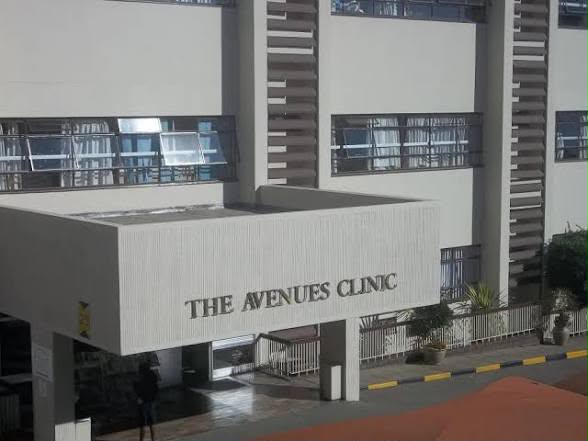
The High Court has granted The Avenues Clinic absolution from the instance in a US$520,000 wrongful death lawsuit brought by the family of Francis Nyadundu, ruling that the plaintiffs failed to provide expert medical evidence linking the hospital’s alleged negligence to his death.
In a judgment delivered on September 30, 2026, High Court judge Justice Dube JP ruled that the family had not established a prima facie case of medical negligence to require Medical Investments (Pvt) Ltd, trading as The Avenues Clinic, to present its defence.
The lawsuit was brought by Nyadundu’s wife, Sheila Nyadundu, and their children, Mutsa and Takunda, who sought damages for the loss of their family’s breadwinner following his death in March 2024.
According to court papers, Nyadundu was admitted to The Avenues Clinic after being diagnosed with liver cirrhosis. His family alleged that he fell from his hospital bed, sustained serious head injuries and subsequently died.
The family accused the hospital and its staff of failing to adequately monitor him despite his reportedly restless and drowsy condition, delaying medical intervention after the fall and failing to notify relatives promptly about his injuries.
They also alleged that the hospital failed to provide adequate staffing and equipment and concealed the circumstances surrounding his death.
The clinic denied negligence, arguing that Nyadundu had several underlying medical conditions, including portal hypertension, hepato-renal syndrome, ascites and fibrosis. It maintained that he had received care consistent with his treatment plan and his doctor’s instructions.
At the close of the plaintiffs’ case, the clinic applied for absolution from the instance, arguing that the family had failed to produce expert evidence demonstrating that its staff had breached accepted medical standards or that any alleged breach had caused Nyadundu’s death.
In assessing the claim, Justice Dube noted that the hospital owed the deceased a duty of care but said the existence of that duty did not, by itself, establish negligence.
The judge found that nursing notes showed Nyadundu had been restless, appeared dizzy and had attempted to get out of bed. Hospital staff had raised the bed rails and removed clutter to reduce the risk of a fall.
However, the court said the family had not presented medical evidence establishing whether the monitoring arrangements and preventive measures were inadequate or fell below accepted professional standards.
“ A fall alone in a hospital setting resulting in death of a patient cannot raise inferences of negligence without exploring the circumstances of the fall and evidence from a medical expert,” the judgment stated.
The court also found that the family had failed to demonstrate how the alleged delays in notifying relatives, the response to the injuries and the absence of an alternative doctor directly contributed to the death.
Although the post-mortem report identified a haemorrhage and head injuries, the judge said the report did not independently establish that the hospital’s actions or omissions caused the fatal injuries.
The court said expert evidence was necessary to establish the relationship between the fall, the deceased’s pre-existing medical conditions and the cause of death.
Justice Dube further found that the two children had failed to establish the legal and factual basis for their individual loss-of-support claims, including evidence of their financial dependence on their father and the actual loss they suffered.
The judge consequently granted the clinic’s application for absolution from the instance, finding that the plaintiffs had failed to establish a sufficient case of negligence and causation.
The court ordered Sheila, Mutsa and Takunda Nyadundu to pay the defendant’s legal costs jointly and severally, with one payment absolving the others.
The ruling does not amount to a finding, after a full defence, that the clinic was not negligent. Rather, the court determined that the evidence presented by the family was insufficient to require the clinic to answer the claim.