
Mtandazo Dube
Sometimes the only way to teach a person or a nation a difficult lesson is to allow them to experience the consequences of their own actions.
A child who is constantly protected from every danger will never fully understand why certain things are harmful. A parent can repeatedly warn a child not to touch a burning candle, but until that child understands the discomfort of heat, the warning remains an abstract idea. The lesson is not meant to destroy the child; it is meant to create awareness.
South Africa may now need a similar lesson.
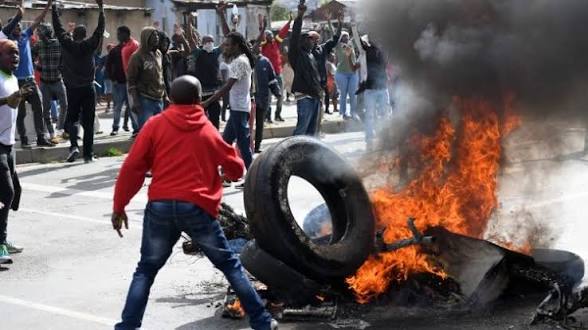
For years, South Africa has experienced repeated episodes of xenophobia and Afrophobia, often directed at fellow Africans from countries that played a significant role in the liberation of the country.
From attacks on Zimbabweans, Mozambicans, Nigerians, Malawians and other African nationals to public rhetoric suggesting that foreigners are responsible for South Africa’s economic challenges, the problem has persisted for far too long.
The tragedy is that these incidents have often been met with condemnation but very little meaningful consequence. The South African government has frequently promised action, but many victims and observers feel that the response has not been strong enough to discourage future attacks.
This lack of consequences has created a dangerous perception: that South Africa can benefit from Africa while simultaneously treating Africans from other countries as unwanted outsiders.
Many South Africans have developed the mistaken belief that their country exists separately from the rest of the continent — that South Africa is somehow superior to other African nations and that it does not need its neighbours.
This is a dangerous illusion.
The reality is that South Africa’s economic success is deeply connected to the African continent. The country’s largest corporations did not become continental giants by operating only within South Africa’s borders. They expanded because Africa provided markets, resources and opportunities.
South African companies dominate many sectors across the continent, including banking, telecommunications, retail, mining, construction and energy.
Companies such as Shoprite, MTN, Standard Bank, FirstRand, Vodacom and others have built significant businesses by serving millions of customers beyond South Africa’s borders.
The continent has been a major growth engine for South African business. South Africa is home to one of Africa’s strongest corporate sectors, hosting a large share of the continent’s billion-dollar revenue companies. But behind those numbers is a simple reality: these businesses depend on African consumers and African resources.
When South African banks expand into countries like Zimbabwe, Zambia, Nigeria, Ghana and Mozambique, they do so because those markets create value. When South African retailers open stores across the continent, they do so because African consumers provide demand.
When South African mining companies operate in countries such as the Democratic Republic of Congo, Zambia and elsewhere, they do so because Africa’s natural resources provide opportunities.
South Africa is not an island. Its prosperity is tied to the prosperity of the continent. This is why continued Afrophobia is not only morally wrong — it is economically self-destructive.
Other African countries have significant leverage. If the continent begins reconsidering how it engages with South African companies, the economic consequences will eventually be felt back in Johannesburg, Cape Town and Pretoria.
African countries have historically welcomed South African businesses because regional integration benefits everyone. But that relationship cannot be built on a foundation where South Africa expects economic access to Africa while some of its citizens reject Africans seeking opportunities within South Africa.
A country cannot demand continental cooperation while tolerating hostility towards the very people who make continental cooperation possible.
However, any response must be carefully considered. The goal should not be to create another cycle of resentment between African peoples. The goal should be to create accountability and encourage governments and institutions to act.
Economic pressure, diplomatic pressure and stronger regional conversations may be necessary to remind South Africa that its position on the continent comes with responsibilities.
South Africa’s history should make it understand this better than most. During the apartheid era, neighbouring African countries sacrificed economically and politically to support the struggle against white minority rule. Countries such as Zimbabwe, Zambia, Mozambique, Botswana and others carried costs because they believed in South Africa’s freedom.
It is therefore painful for many Africans to see citizens of a liberated South Africa turning against people from countries that once stood with them.
The answer is not hatred towards South Africa. Africa does not need another division. The answer is accountability. The South African government must confront the reality that allowing vigilante groups and anti-foreigner movements to operate without serious consequences damages not only its reputation but also its economic interests.
Isolation is rarely created by outsiders alone. Sometimes it is created by the actions of a nation itself. South Africa has benefited enormously from Africa, and Africa has benefited from South Africa.
That relationship must be protected. But respect must go both ways. Perhaps it is time South Africa experienced the consequences of forgetting that its future is not separate from Africa’s future.
The lesson is simple: Africa does not need South Africa less than South Africa needs Africa.


