By Judith Matanire
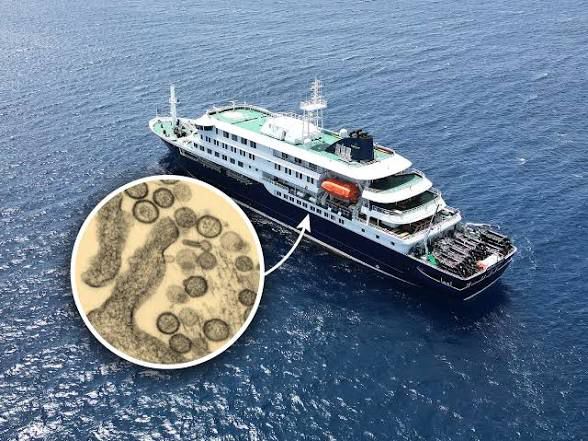
A rare hantavirus outbreak aboard an expedition cruise vessel has left three passengers dead, several others ill and nearly 150 people stranded at sea, as global health authorities investigate the unusual spread of the disease in a maritime setting.
The outbreak occurred on board the MV Hondius, a Dutch-operated expedition ship currently anchored off Praia in Cape Verde, after departing from Ushuaia, Argentina, on a transatlantic voyage that included stops in Antarctica and remote Atlantic islands.
According to the World Health Organization, at least seven cases of hantavirus have been identified — two confirmed and five suspected — with one patient still in intensive care in South Africa. Two additional crew members showing acute respiratory symptoms are awaiting emergency medical evacuation.
Three fatalities have been recorded so far: a Dutch couple and a German national. The first victim, a 70-year-old Dutch man, died on April 11 after developing fever, abdominal pain and other symptoms. His wife later died in South Africa after testing positive for hantavirus, while a German passenger died on board on May 2 from suspected infection.
Health officials now say human-to-human transmission cannot be ruled out, particularly among close contacts such as cabin mates or spouses. WHO’s epidemic preparedness lead, Dr. Maria Van Kerkhove, said authorities are working on the assumption that limited transmission between individuals may have occurred, although the virus is not easily spread like COVID-19 or influenza.
“We are looking at close-contact transmission scenarios, but the overall risk to the general public remains low,” the WHO said.
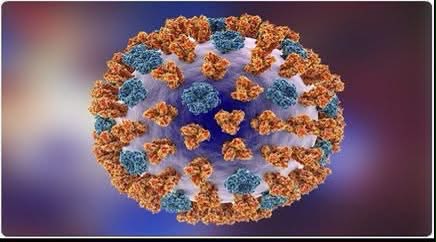
Hantavirus is typically contracted through contact with infected rodents, especially via inhalation of particles from urine, droppings or saliva. Its appearance on a cruise ship — an environment more commonly associated with highly contagious illnesses like norovirus — has puzzled experts and triggered a multi-country investigation.
Scientists suspect the strain involved could be the Andes virus, a rare type of hantavirus found in South America that is known to allow limited person-to-person transmission. Laboratory sequencing is underway to confirm this.
Passengers on board reported growing anxiety as the situation unfolded. Travel vlogger Jake Rosmarin described the experience as “very real,” saying those on board were dealing with fear and uncertainty while awaiting evacuation and further instructions.
Strict containment measures have since been implemented on the vessel, including isolation protocols, social distancing, and cabin-based meal services. Access to shared indoor spaces has been restricted, while passengers are allowed limited time outdoors.
Authorities are also conducting contact tracing, including among individuals who may have interacted with infected passengers before evacuation. The ship is expected to proceed to the Canary Islands, where Spanish health officials will carry out a full epidemiological investigation and disinfection process.
Experts say the source of the outbreak remains unclear. Preliminary theories suggest the initial infections may have occurred before boarding in Argentina, during shore excursions, or less likely, through rodent exposure on board. The virus has an incubation period of one to six weeks, meaning passengers may have been infected well before symptoms appeared.
Globally, hantavirus infections are rare but potentially deadly. In severe cases, particularly those involving Hantavirus Pulmonary Syndrome, fatality rates can reach up to 40 percent. Early symptoms often resemble flu — including fever, fatigue and muscle pain — before rapidly progressing to pneumonia, respiratory failure and, in some cases, death.
There is currently no specific antiviral treatment for hantavirus, with care focused on managing symptoms and supporting breathing in critical patients.
Despite the severity of the outbreak, health officials continue to stress that the situation is contained and does not pose a broader public health threat.
Investigations remain ongoing as authorities work to determine the exact origin and transmission dynamics of the virus aboard the ship.